
Many people think visual identity is where brand building begins. It isn’t.
It feels like the most visible decision, so it gets made first. The visual layer comes first because it is the most tangible expression of the brand — the thing people will actually see. Logo. Colors. Font. Website.
That sequence feels logical. But it is also one of the most expensive mistakes a brand can make.
What gets built when the foundation isn’t there
Visual decisions made without a foundation don’t fail immediately. That’s what makes them difficult to diagnose.
The logo looks professional. The color palette feels right. The website gets built. The brand appears to exist. It has a face. It has a presence. What it doesn’t have is a logic underneath — a set of decisions that explain why these choices were made and what they’re meant to signal.
Without that logic, the visual identity is floating. It reflects a feeling, an aesthetic preference, or a trend — not a brand position. And a visual identity built on feeling rather than foundation starts to show its cracks the moment the brand needs to grow, communicate clearly, or compete for attention.
The logo no longer seems to fit the business. The website sounds like a different company than the one the visuals promise. Marketing campaigns pull in different directions. Nothing is obviously broken, but nothing quite reinforces anything else either. The brand looks assembled rather than intentional.
How it breaks down in practice
The breakdown rarely happens all at once. It accumulates.
A designer gets briefed without clear direction on who the brand is for or what it needs to communicate. They make smart aesthetic choices, but those choices are based on incomplete inputs. The client approves the direction because it looks good — not because it reflects a decided brand identity.
Then the revisions start. The voice feels wrong. The messaging shifts. A new audience gets identified. A competitor launches something similar. The brand that looked finished turns out to be unresolved.
So the designer goes back in. The color palette gets adjusted. The logo gets simplified. The website gets rewritten. What was supposed to be a completed brand identity becomes a moving target — not because the designer did poor work, but because the decisions that should have preceded the design were never made.
This is the revision cycle that most creative professionals recognize immediately. It is not a design problem. It is a foundation problem wearing a design costume.
The cost no one talks about
The visible cost is the revision cycle — the rework, the redesign, the budget that goes further than it should have needed to.
But there is a cost that runs deeper than that, and it shows up in every creative review before the redesign ever gets approved.
When the foundation hasn’t been decided, no one knows what right looks like. Every design review becomes a debate about taste instead of a discussion about strategy. Someone asks to try a different color. Someone wants the logo bigger. Someone says it doesn’t feel modern enough, or warm enough, or bold enough. Not because the work is wrong — but because there are no agreed principles to measure it against.
Teams spend energy searching for confidence that should have been established before the first mockup was opened. The uncertainty doesn’t announce itself as a foundation problem. It arrives as indecision, as prolonged approvals, as creative fatigue. The work keeps moving because no one can say with authority that it’s done.
That is the cost that rarely shows up in a project budget. And it is often the most expensive one.
What deciding before designing actually changes
The difference is not just in the final output. It is in the process itself.
When the foundation exists first, the design brief becomes a real document. The designer knows who the brand is for, what it needs to signal, and what the brand personality requires visually. Aesthetic choices stop being subjective and start being strategic. Feedback stops being about personal preference and starts being about alignment.
Revisions still happen. But they happen within a defined set of parameters rather than in search of them. The question shifts from “does this feel right?” to “does this match what we decided?” That is a faster, cheaper, and less exhausting question to answer.
For small business owners, it means less money spent on creative work that needs to be redone. For designers and freelancers, it means fewer revision cycles and cleaner creative briefs. For creators, it means a brand that holds together as the work evolves rather than splintering every time the content shifts.
The foundation doesn’t eliminate creative work. It protects it.
The cost is more than money
People tend to calculate the cost of designing before deciding in dollars — the rebrand, the new website, the revised collateral. Those costs are real. But the more significant cost is momentum.
Every round of visual revision is a round of brand indecision made visible. Redesign iterations are time the brand spent looking like something it wasn’t. Each misaligned touchpoint is an audience that received a mixed signal and moved on.
Brands that design before they decide spend more time correcting than building. They stay in a loop of refinement that never quite resolves because the thing that needs to be resolved isn’t the design — it’s the decisions behind it.
Designing is not where brands begin. It is where the decisions become visible. The quality of the design depends entirely on the quality of the thinking that came before it.
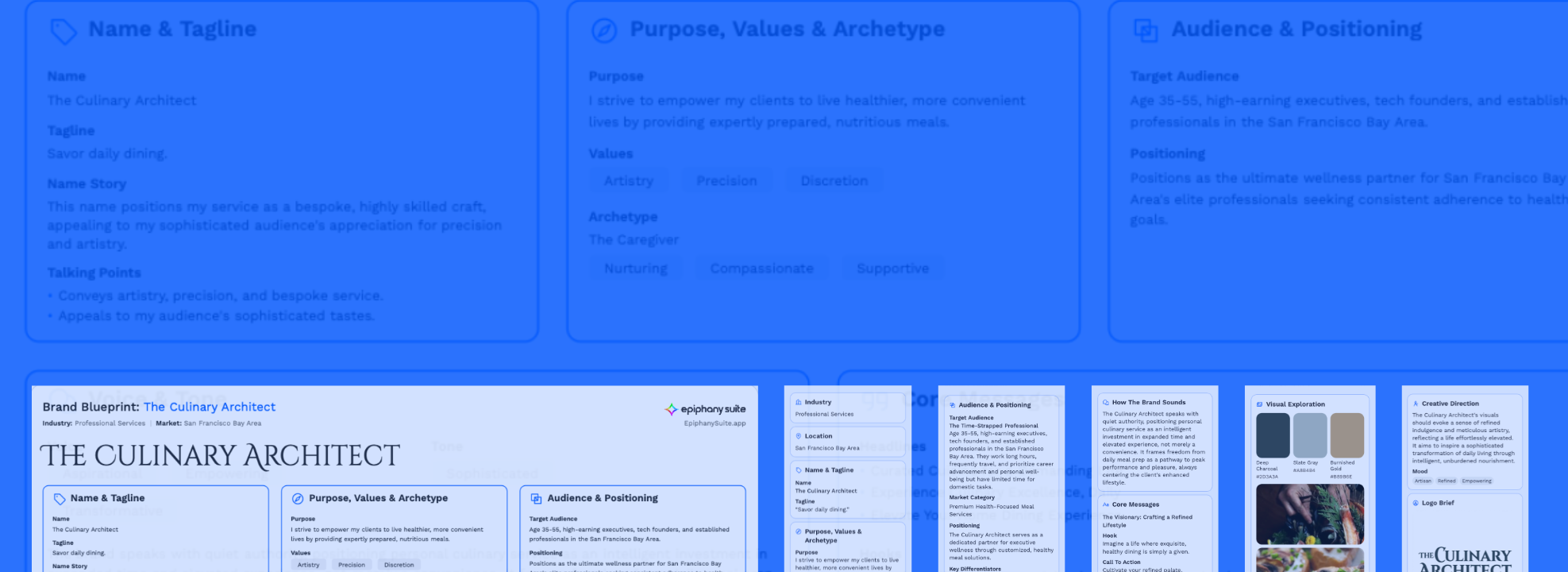
This is the argument that opens Before You Design, my seven-book series on the decisions every brand must make before the design work begins.
EpiphanySuite was built to help founders, designers, and creators make those decisions before the design work begins. Start for free.