
A brand can accumulate a lot before it becomes clear.
Notes about the audience. Thoughts about the name. A saved moodboard. A voice direction. A positioning line. A handful of phrases that feel close but not quite right. Each piece may be useful. The problem starts when those pieces stay pieces.
A brand blueprint is what turns them into something connected.
It is not what most people think it is
A blueprint is not a logo, a moodboard, or a style guide. Those things matter — they are the expression of the brand. A style guide explains how to use the visual identity. A brand book captures the story and expression. Both are valuable. But a blueprint is what makes those tools more useful. It answers the questions that need to be settled first, before the brand is translated into design, content, or campaigns.
Most founders do not skip the blueprint because they do not care. They skip it because it is invisible. There is no obvious moment when it is missing. The work keeps moving. The logo gets made. The website goes up. Content starts flowing. Everything looks like progress until something feels off — and by then, the brand has been making decisions without a center.
A blueprint gives the brand a center.
What it actually does
A clear audience gives messaging direction. Strong positioning helps the brand understand what it is trying to own. A defined voice makes writing more consistent. Visual direction connected to strategy keeps design from becoming a matter of personal preference.
Each decision informs the next. That is not an abstraction — it is how brand-building actually works when it works. The decisions that come early determine how much clarity or confusion lives in every decision that follows.
This is where most brand-building efforts stall. They move from idea to execution without connecting the thinking in between. Colors are chosen before the feeling behind them is defined. A logo gets designed before anyone has decided what the brand needs to signal. Content goes out before the brand has committed to what it consistently stands for. The foundation was never built — and the gap between what the brand means and how it shows up keeps widening.
A blueprint closes that gap before it opens.
What it holds
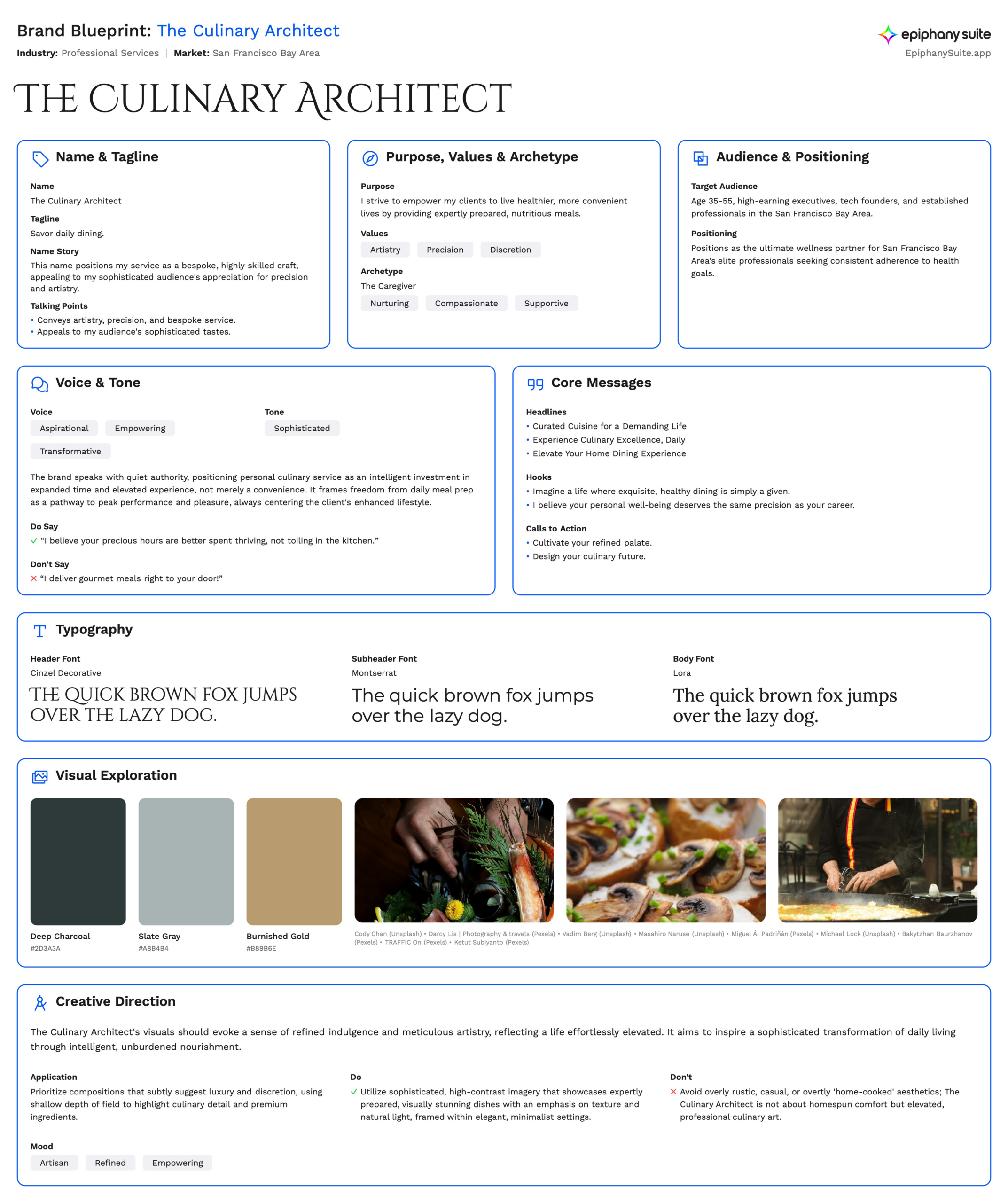
A brand blueprint holds the essentials: purpose, values, audience, positioning, personality, voice, messaging, and visual direction. Depending on the brand, it may also include emotional anchors, key differentiators, content themes, and decision criteria.
The specific sections matter less than the function. A blueprint turns scattered thinking into a foundation the brand can actually build from.
It does not remove creativity from the process. It gives creativity something to respond to. Designers still make visual decisions. Writers still shape language. Founders still make judgment calls. The difference is that those decisions are no longer floating. They have a shared reference point — so when new ideas appear, there is already a way to evaluate whether they belong.
The practical difference
For founders and small businesses, this is especially significant. Decisions are made quickly, often by the same person across every function. Without a blueprint, each new need can restart the brand conversation. With one, the brand has something to return to — something that holds the work together even when the work is moving fast.
When more people get involved, the blueprint becomes even more valuable. A designer makes better choices when the strategy is visible. A copywriter writes with more precision when the voice and audience are clear. A founder gives better feedback when there is a shared standard beyond personal preference.
A brand blueprint does not replace any of that judgment. It supports it.
What it makes possible
Consistency is usually treated as a visual problem. Same logo, same colors, same fonts. Those things matter, but they only carry the brand so far. A brand can look consistent and still feel unclear when the message keeps shifting or the positioning is hard to understand.
A blueprint supports something deeper. It helps the brand mean the same thing across different moments — not just look the same, but hold the same meaning. That is what recognition is actually built from. Not visual repetition alone, but the pattern of decisions underneath it.
A brand is not built from one decision. It is built from connected decisions that keep reinforcing each other over time.
That is what a brand blueprint is for.
Before you name your brand, build the foundation behind it. EpiphanySuite helps you start with the decisions that matter. Start for free.